
ใครที่ชื่นชอบการพนัน ที่มี ทุนน้อย UFABET เปิดโอกาสให้คุณ เสมอ สมัครเว็บแทงบอลออนไลน์ ด้วยเงื่อนไขการ เดิมพันสเต็ปเริ่ม 10 บาท ให้คุณสามารถ ทำเงิน จากหลักสิบเป็นหลักพันได้ ไฮไลท์ของเว็บ คือการที่ผู้เล่น ไม่ต้องทำเทิร์น หากบิลของคุณเข้า ก็สามารถ แจ้งถอนเงิน ได้ ทันที ผ่านระบบออโต้ ทำให้การเล่นพนันออนไลน์กับ UFABET เป็นเรื่อง ง่ายดาย มากที่สุด
Finance, Investing
Finance, Investing
Fast and Simple FAFF File Viewing with FileViewPro
A FAFF file is a file that uses the `.faff` extension, but unlike familiar formats such as PDF, DOCX, JPG, or MP3, it does not appear to be a widely recognized standard file type. In practical terms, that means it is probably not a format that many different programs are built to open automatically. Common formats are widely supported because their structure is publicly documented or broadly understood, allowing many applications to read them. A FAFF file, by contrast, is more likely tied to a specific piece of software, which is why simply seeing the extension does not immediately tell you exactly what kind of content it holds.
When a file type is not a common public format, it usually means the format is not broadly used or openly standardized in the same way as mainstream file types. Instead of being designed for universal compatibility, it may have been created for the internal needs of one program, one company, or one workflow. In that situation, the extension acts more like a label used by that software to identify its own files. This is why an uncommon extension such as `. If you have any sort of concerns concerning where and how you can utilize FAFF file recovery, you could contact us at our web site. faff` may not be recognized by Windows or by common third-party viewers, converters, or editors. The file may only make proper sense when opened by the original application that created it.
This is also why a FAFF file is often described as a proprietary or application-specific data file. That phrase means the file is likely meant to store information for a particular program rather than serve as a general-purpose document, image, or media file. It could contain settings, project data, saved work, structured records, or other information that the software needs in order to load, continue, or manage a task. Because the structure is often defined by the program itself, other applications may not know how to interpret the contents correctly.
Even so, an uncommon file extension does not automatically mean the contents are completely unreadable. Some programs save data using text-based structures such as XML or JSON, even when they assign the file a custom extension. In those cases, opening the file in a text editor might reveal readable clues such as names, dates, file paths, settings, version information, or labeled data fields. If the file was stored in a binary format instead, however, it will usually appear as random or broken characters in a text editor. That does not necessarily mean the file is damaged; it simply means the data was encoded for software interpretation rather than human reading.
 If you do not know what program created the FAFF file, the best clue is often the file’s origin rather than the extension itself. It helps to look at where the file came from, such as an email attachment, a website download, a folder created by a certain application, or another computer where specific software was installed. The surrounding context often reveals more than the extension alone. In many cases, identifying the application that produced the file is the key to understanding what the file is and how it should be opened. In short, a FAFF file is most likely a specialized file associated with a particular program, and the original software that created it is usually the safest and most reliable way to open or interpret it.
How Students Use FileViewPro To Open FAFF Files
A FAFF file is a file that uses the `.faff` extension, but unlike familiar formats such as PDF, DOCX, JPG, or MP3, it does not appear to be a widely recognized standard file type. In practical terms, that means it is probably not a format that many different programs are built to open automatically. Common formats are widely supported because their structure is publicly documented or broadly understood, allowing many applications to read them. A FAFF file, by contrast, is more likely tied to a specific piece of software, which is why simply seeing the extension does not immediately tell you exactly what kind of content it holds.
When a file type is not a common public format, it usually means the format is not broadly used or openly standardized in the same way as mainstream file types. Instead of being designed for universal compatibility, it may have been created for the internal needs of one program, one company, or one workflow. In that situation, the extension acts more like a label used by that software to identify its own files. This is why an uncommon extension such as `.faff` may not be recognized by Windows or by common third-party viewers, converters, or editors. The file may only make proper sense when opened by the original application that created it.
This is also why a FAFF file is often described as a proprietary or application-specific data file. That phrase means the file is likely meant to store information for a particular program rather than serve as a general-purpose document, image, or media file. It could contain settings, project data, saved work, structured records, or other information that the software needs in order to load, continue, or manage a task. Because the structure is often defined by the program itself, other applications may not know how to interpret the contents correctly.
Even so, an uncommon file extension does not automatically mean the contents are completely unreadable. Some programs save data using text-based structures such as XML or JSON, even when they assign the file a custom extension. In those cases, opening the file in a text editor might reveal readable clues such as names, dates, file paths, settings, version information, or labeled data fields. If the file was stored in a binary format instead, however, it will usually appear as random or broken characters in a text editor. If you have any type of questions concerning where and ways to use FAFF file application, you can call us at our own page. That does not necessarily mean the file is damaged; it simply means the data was encoded for software interpretation rather than human reading.
If you do not know what program created the FAFF file, the best clue is often the file’s origin rather than the extension itself. It helps to look at where the file came from, such as an email attachment, a website download, a folder created by a certain application, or another computer where specific software was installed. The surrounding context often reveals more than the extension alone. In many cases, identifying the application that produced the file is the key to understanding what the file is and how it should be opened. In short, a FAFF file is most likely a specialized file associated with a particular program, and the original software that created it is usually the safest and most reliable way to open or interpret it.
Trouver une cougar près de chez soi avec JM Cougar
Avec JM Cougars Cougar, il est facile de rencontrer des femmes mûres grâce à une communauté spécialisée et active. Les profils sont détaillés et indiquent clairement les attentes, ce qui facilite des échanges compatibles. Les filtres permettent de cibler l’âge, la localisation et le type de relation recherché. La messagerie instantanée et la géolocalisation favorisent des rencontres rapides, souvent à proximité. Accessible sur mobile et ordinateur, JM Cougar offre une interface intuitive et des options de confidentialité pour des échanges discrets et sécurisés.
How FileViewPro Makes IMP File Opening Effortless
An IMP file is not one single universal file type. The `.imp` extension has been used by different software programs for different purposes, which means the extension alone is usually not enough to tell you exactly what the file contains. In some cases, an IMP file is simply an import file meant to move data into another program. In other cases, it may be tied to an older spreadsheet application like Lotus Improv, or it may be an internal asset or resource file used by specialized software or games. Because of that, the most important clue is not just the extension itself, but where the file came from and what software created it.
When an IMP file is used as an import file, it usually means the file was designed to bring information into a program rather than to be viewed directly like a normal document. An import file acts as a container of structured data that another application can read and load into its own system. It may contain records such as customer data, inventory, accounting details, settings, project information, or transaction logs. Some IMP files are plain text, so opening them in a text editor may reveal readable values, field names, or separators. When you adored this article in addition to you want to receive more info concerning IMP file program generously go to our own internet site. Others are binary, which means they appear as unreadable characters because they were written in a machine-friendly format. In this sense, “import file” describes the file’s purpose more than its exact internal structure.
The reason this can be confusing is that different developers sometimes reuse the same extension for completely different formats. One program may use `.imp` as a data import file, while another may use it for something unrelated. That means two files with the same extension can have entirely different contents and require different software to open them. A good way to think about it is that the label `.imp` gives only a rough clue, not a full identification. To truly identify the file, you usually need context such as the source of the file, the application it came from, whether it opens as text, and whether it is stored beside other files belonging to a specific program.
One older and more specific use of the IMP extension is the Lotus Improv spreadsheet format. Lotus Improv was a discontinued spreadsheet program developed by Lotus, and it worked differently from the more familiar Excel-style spreadsheet model. Instead of focusing mainly on fixed cell references in a grid, Lotus Improv separated the data, the formulas, and the view of the data into more distinct layers. This design made it especially interesting for modeling and analysis, because users could reorganize the way information was displayed without rebuilding the whole spreadsheet logic. If an IMP file is from Lotus Improv, it may contain spreadsheet data, formulas, and layout information tied to that unique system. Since Lotus Improv is now obsolete, opening such files today is often difficult without old software, an emulator, or some kind of conversion process.
Another possible meaning of an IMP file is that it serves as an internal asset or resource file in a game or specialized application. In that context, the file may store things such as textures, interface graphics, sprites, images, animation data, model information, or other supporting resources that the software needs in order to run properly. Developers sometimes use custom extensions like `.imp` instead of standard formats such as PNG or JPG because they want the data packaged in a way their own engine understands. The file may contain raw image data, metadata, references to other resources, or multiple assets bundled together. These files are usually not meant to be opened directly by the user, which is why they often look like gibberish in a text editor and only work correctly inside the original software.
That is why identifying an IMP file usually starts with asking where it came from. If it was exported from business or database software, it is probably an import file. If it came from an old legacy spreadsheet environment, it might be a Lotus Improv file. If it sits inside a program folder with other unusual files, it may be an internal asset used by a game or application. In practical terms, the best approach is to find out what program created it, try opening it in a text editor to see whether it contains readable text, and avoid assuming that every IMP file is the same. The extension points you in a direction, but the real answer depends on the file’s source and structure. If you have a specific IMP file, details like its filename, folder location, file size, or the first few lines or bytes can help determine exactly what type of IMP file it is.
Common Questions About IMP Files and FileViewPro
An IMP file is not one single universal file type. The `.imp` extension has been used by different software programs for different purposes, which means the extension alone is usually not enough to tell you exactly what the file contains. In some cases, an IMP file is simply an import file meant to move data into another program. In other cases, it may be tied to an older spreadsheet application like Lotus Improv, or it may be an internal asset or resource file used by specialized software or games. Because of that, the most important clue is not just the extension itself, but where the file came from and what software created it.
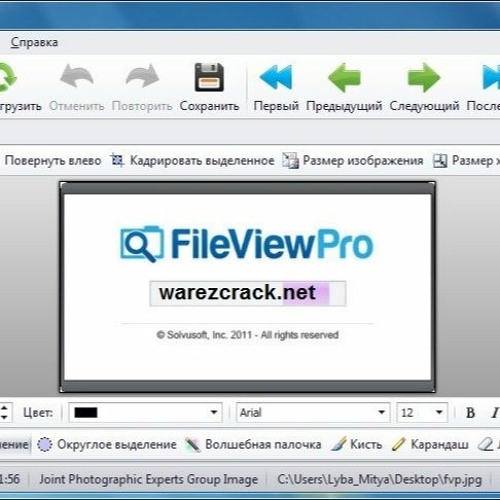 When an IMP file is used as an import file, it usually means the file was designed to bring information into a program rather than to be viewed directly like a normal document. An import file acts as a container of structured data that another application can read and load into its own system. It may contain records such as customer data, inventory, accounting details, settings, project information, or transaction logs. Some IMP files are plain text, so opening them in a text editor may reveal readable values, field names, or separators. Others are binary, which means they appear as unreadable characters because they were written in a machine-friendly format. In this sense, “import file” describes the file’s purpose more than its exact internal structure.
The reason this can be confusing is that different developers sometimes reuse the same extension for completely different formats. One program may use `.imp` as a data import file, while another may use it for something unrelated. That means two files with the same extension can have entirely different contents and require different software to open them. A good way to think about it is that the label `.imp` gives only a rough clue, not a full identification. To truly identify the file, you usually need context such as the source of the file, the application it came from, whether it opens as text, and whether it is stored beside other files belonging to a specific program.
If you have any queries with regards to the place and how to use IMP file type, you can call us at our own internet site. One older and more specific use of the IMP extension is the Lotus Improv spreadsheet format. Lotus Improv was a discontinued spreadsheet program developed by Lotus, and it worked differently from the more familiar Excel-style spreadsheet model. Instead of focusing mainly on fixed cell references in a grid, Lotus Improv separated the data, the formulas, and the view of the data into more distinct layers. This design made it especially interesting for modeling and analysis, because users could reorganize the way information was displayed without rebuilding the whole spreadsheet logic. If an IMP file is from Lotus Improv, it may contain spreadsheet data, formulas, and layout information tied to that unique system. Since Lotus Improv is now obsolete, opening such files today is often difficult without old software, an emulator, or some kind of conversion process.
Another possible meaning of an IMP file is that it serves as an internal asset or resource file in a game or specialized application. In that context, the file may store things such as textures, interface graphics, sprites, images, animation data, model information, or other supporting resources that the software needs in order to run properly. Developers sometimes use custom extensions like `.imp` instead of standard formats such as PNG or JPG because they want the data packaged in a way their own engine understands. The file may contain raw image data, metadata, references to other resources, or multiple assets bundled together. These files are usually not meant to be opened directly by the user, which is why they often look like gibberish in a text editor and only work correctly inside the original software.
That is why identifying an IMP file usually starts with asking where it came from. If it was exported from business or database software, it is probably an import file. If it came from an old legacy spreadsheet environment, it might be a Lotus Improv file. If it sits inside a program folder with other unusual files, it may be an internal asset used by a game or application. In practical terms, the best approach is to find out what program created it, try opening it in a text editor to see whether it contains readable text, and avoid assuming that every IMP file is the same. The extension points you in a direction, but the real answer depends on the file’s source and structure. If you have a specific IMP file, details like its filename, folder location, file size, or the first few lines or bytes can help determine exactly what type of IMP file it is.